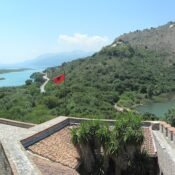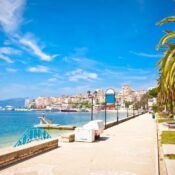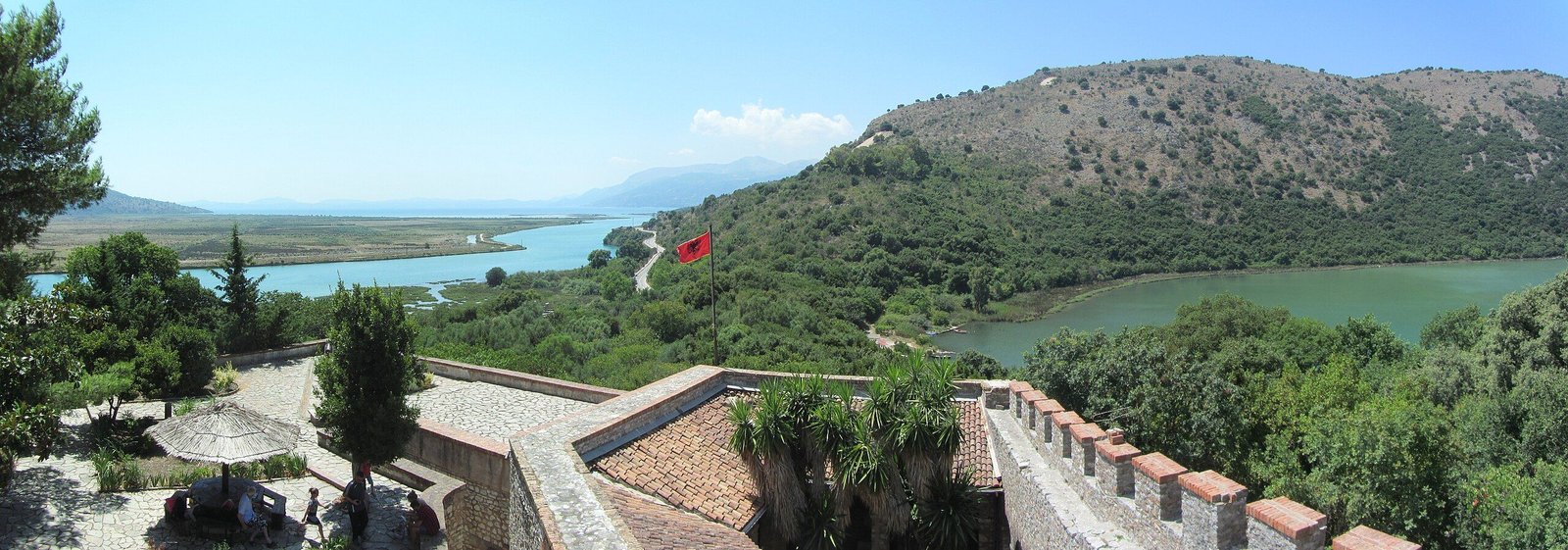
Nestled along Albania’s stunning southern coast, Sarandë is more than just a beach destination. This vibrant coastal city serves as a gateway to some of the most remarkable historical sites in the Balkans, where ancient civilizations left their mark across millennia. From Byzantine monasteries perched on dramatic hillsides to UNESCO World Heritage archaeological wonders, the area around Sarandë offers history enthusiasts an unforgettable journey through time.
Butrint National Park: A UNESCO World Heritage Wonder
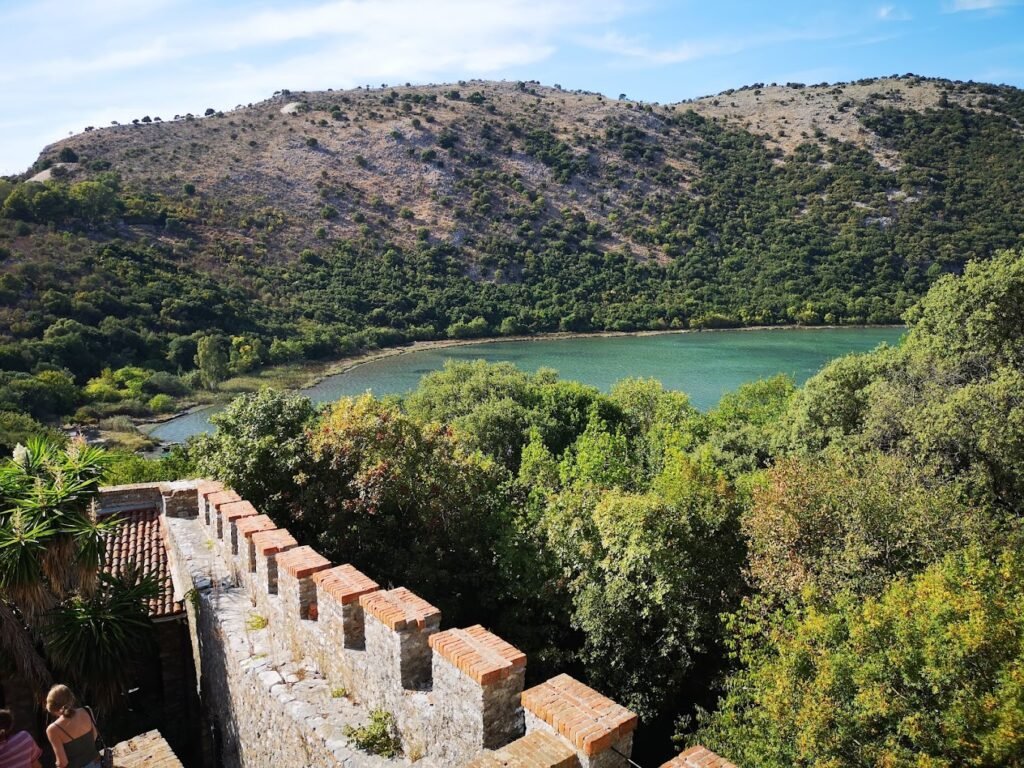
No visit to Sarandë is complete without exploring Butrint National Park, located just 18 kilometers south of the city. This extraordinary site seamlessly blends archaeological magnificence with pristine natural beauty across nearly 10,000 hectares of diverse landscapes.
Butrint’s ancient city has witnessed human habitation since prehistoric times, evolving through Greek, Roman, Byzantine, and Venetian periods before being abandoned in the late Middle Ages. Walking through the shaded woodland paths, you’ll encounter a breathtaking array of ruins: a well-preserved Greek theater where performances once entertained ancient audiences, a Roman forum that served as the heart of civic life, and a Byzantine baptistery adorned with exquisite sixth-century mosaic floors.
The Temple of Asclepius stands as one of Europe’s best-preserved Roman structures, while the paleo-Christian basilica rebuilt in the ninth century showcases the area’s enduring religious significance. What makes Butrint truly special is how these 2,500-year-old monuments emerge from lush Mediterranean forests, creating an almost mystical atmosphere where history and nature intertwine.
Beyond archaeology, Butrint is an ecological sanctuary protecting 246 bird species, grey wolves, golden jackals, and rare marine life including monk seals. The park’s wetlands, recognized internationally for their environmental importance, add another dimension to this multifaceted treasure. Plan to spend at least 2-3 hours exploring, and arrive early in the morning to beat the crowds and experience the site at its most serene.
The Monastery of the Forty Saint Martyrs: A Pilgrimage Site Lost to Time
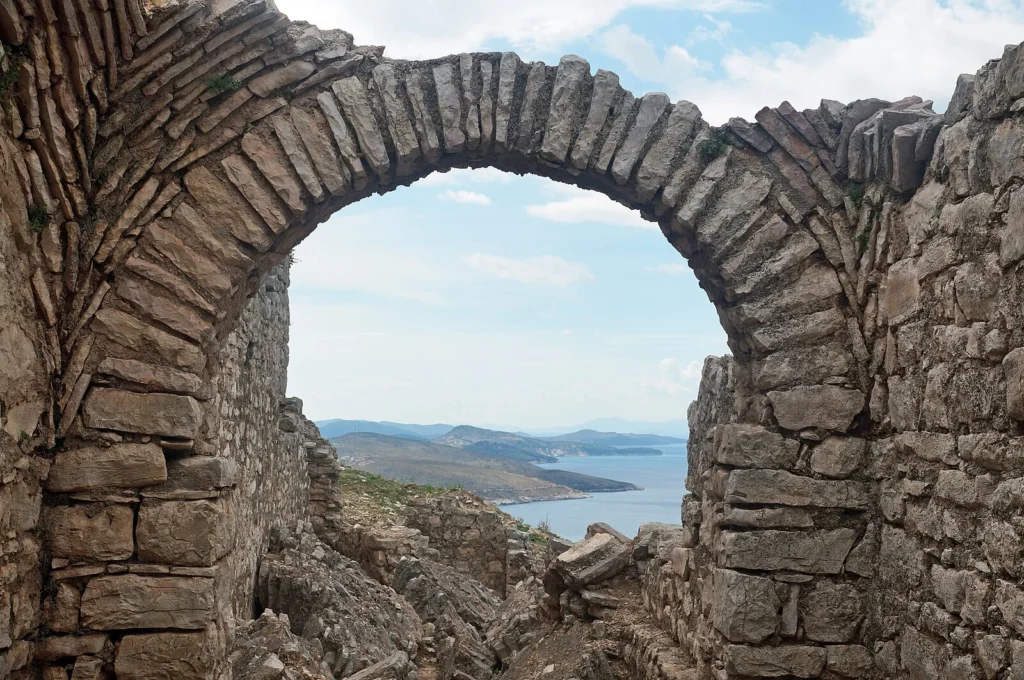
High on a hillside overlooking Sarandë stand the haunting ruins of the Monastery of the Forty Saint Martyrs, once among the most important pilgrimage destinations in the entire Ionian Sea region. Founded in the sixth century during the reign of Byzantine Emperor Justinian, this sprawling monastery complex dominated religious life in the area for over a millennium.
The monastery’s name, Agioi Saranta in Greek, was so significant that it was eventually adopted by the city below, transforming ancient Onchesmos into modern Sarandë. At its peak, the complex featured an impressive basilica church—the largest of its type in the region—along with pilgrim hostels, underground chambers containing forty small chapels (each dedicated to one of the Forty Martyrs of Sebaste), holy water springs, and crypts adorned with painted decorations from late antiquity.
The monastery’s decline began with Ottoman conquest in the 14th-15th centuries, though it experienced renewed interest in the 18th-19th centuries and continued hosting annual celebrations into the early 20th century. Tragically, the site was devastated during World War II and further demolished during Albania’s communist era when it was converted into a military base. Today, only portions of the basilica’s side walls remain standing, yet the site retains spiritual significance for the local Greek Orthodox community, with pilgrims still leaving flowers to honor its sacred history.
Lëkurësi Castle: Guardian of the Coast
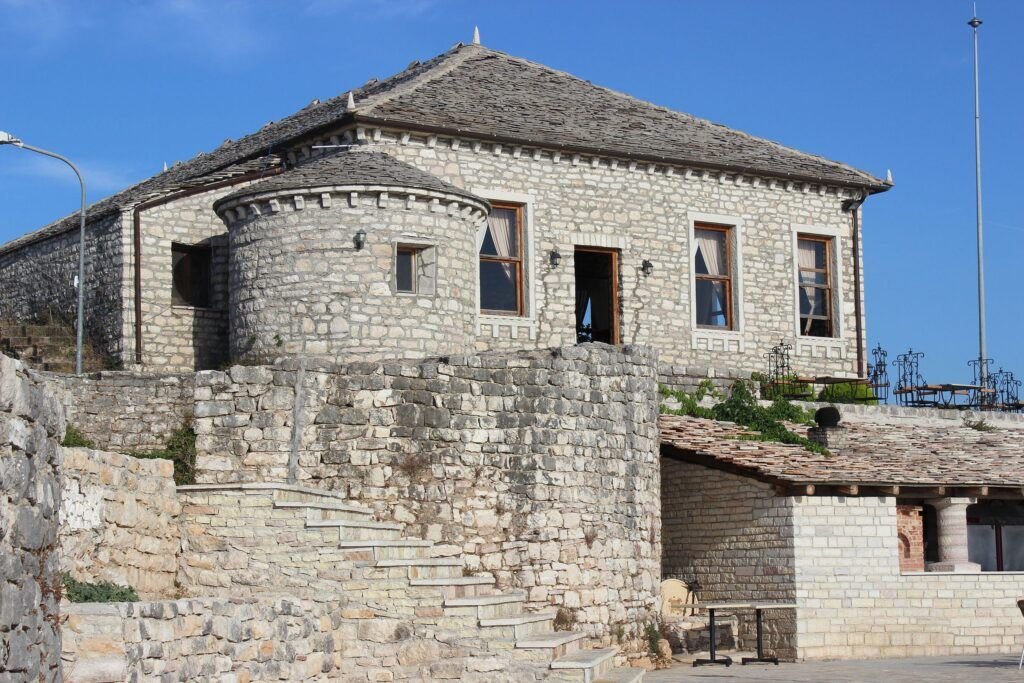
Perched on a strategic hilltop approximately one kilometer southeast of Sarandë, Lëkurësi Castle commands sweeping views over the city, the Straits of Corfu, and the nearby islands of Ksamil. Built in 1537 under orders from Sultan Suleiman the Magnificent, this Ottoman fortress was designed to defend against Venetian threats and housed a garrison of about 220 soldiers.
The castle’s architecture features an almost square layout with two round towers at opposite corners containing defensive loopholes. While much of the structure has deteriorated over the centuries, the southern and eastern sections remain the best preserved. The fortress witnessed significant conflicts throughout its history, including an attack by Ali Pasha of Ioannina in the late 18th century and a dramatic siege in 1878 during an Albanian-Greek battle that ended a Greek revolt.
A village called Lëkurës once thrived on the western slope of the hill, apparently more populous than Sarandë itself until the 19th century. Today, visitors come to the castle not only for its historical significance but also for the spectacular panoramic views it offers—making sunset visits particularly memorable.
St. George’s Monastery: A Fortress of Faith
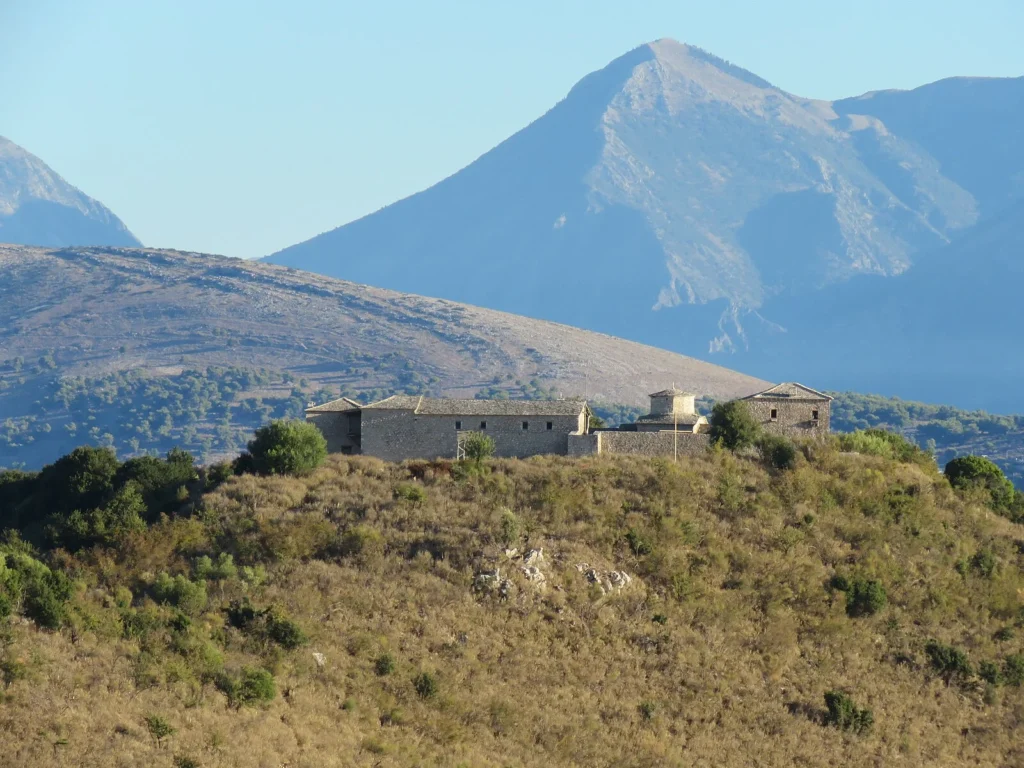
Located in the village of Demë, about 9 kilometers from Sarandë’s center, St. George’s Monastery (Manastiri i Shën Gjergjit) perches dramatically on a hill at the narrowest point of the Ksamil peninsula. This fortified monastery, designated as a Cultural Monument of Albania, offers breathtaking views of the Ionian Sea, Lake Butrint, and the Greek island of Corfu.
The monastery complex belongs to the category of fortified monasteries, with protective walls featuring towers and turrets built in the 18th century atop ancient foundations. The compound includes two churches and auxiliary buildings, giving the site a fortress-like appearance that speaks to the turbulent history of the region.
The main Church of St. George dates back to the 14th century, though extensive reconstruction occurred in the 19th century. Inside, visitors can see icons and faded wall paintings, along with an unusual brick iconostasis with three narrow passages leading to the altar. The church’s architecture includes a long narthex leading to the nave, topped by a dome, with three layers of overlapping wall paintings visible on the interior walls—evidence of centuries of religious devotion.
While the monastery grounds are often locked to visitors, the site remains worth the journey for its stunning location and historical atmosphere. The final approach requires parking at the main road and walking about 10 minutes uphill, but the panoramic views reward the effort.
The Synagogue and Basilica Complex: Layers of Faith
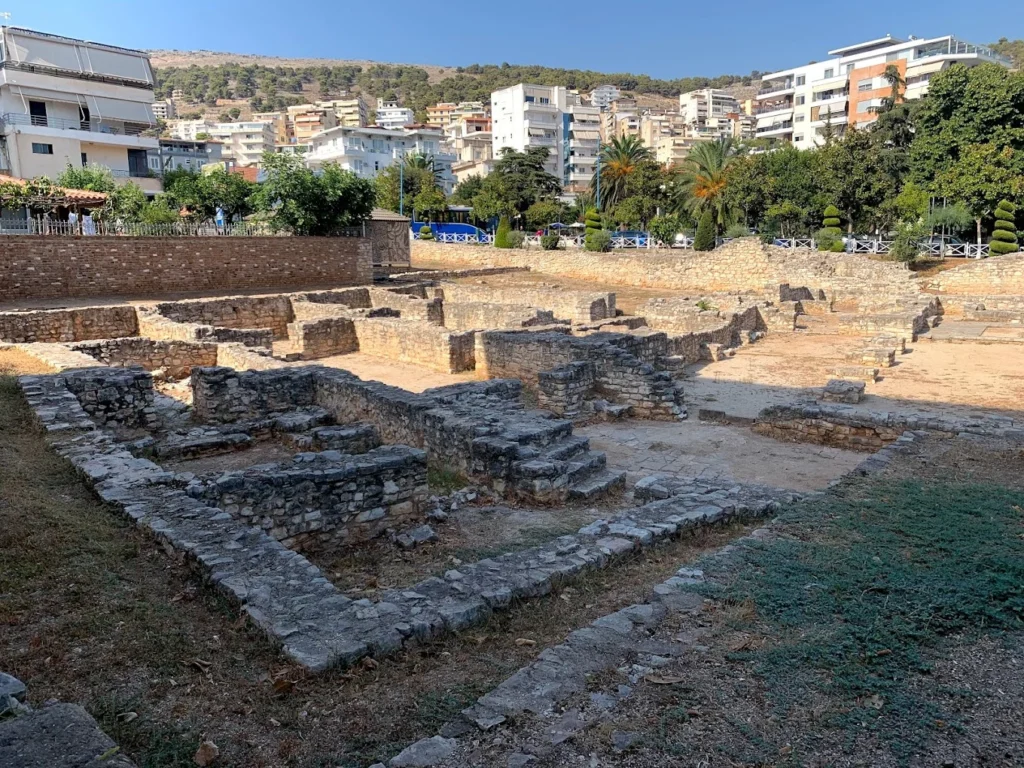
In the heart of Sarandë, within the walls of the medieval fortress of ancient Onchesmos, lies one of the most fascinating archaeological sites in the region: the Synagogue and Basilica Complex. This remarkable site represents one of the earliest and largest Jewish communities in the Balkans and vividly illustrates the religious transformations that swept through the Mediterranean world.
The complex’s history spans centuries, with construction phases dating from the 4th century BC through the 6th century AD. Originally built as an early Christian basilica, the structure was transformed into a synagogue at the end of the 4th century, serving a prosperous Jewish community during the 5th and 6th centuries. In the 6th century, it was converted back into a basilica before being destroyed, likely during Avaro-Slav attacks around 580-585 AD.
The site’s four intricate mosaic floors are its crowning glory, normally covered with sand for preservation. One particularly significant mosaic displays a seven-branched menorah flanked by a citron and ram’s horn—powerful symbols of Jewish holidays and cultural identity. These mosaics provide invaluable evidence of Jewish life in ancient Albania.
Discovered in 1980 but not extensively excavated until 2003, the site is now easily accessible in Sarandë’s city center, located between Rruga Skënderbeu and Rruga Onhezmi near Friendship Park. Entry is free, and while the actual mosaics are preserved in the local Archaeological Museum, large photographs at the site allow visitors to appreciate their beauty and historical importance.
Planning Your Historic Journey
The concentration of significant historical sites around Sarandë makes it an ideal base for exploring Albania’s ancient past. Most sites are within easy reach by car, taxi, or organized tour, and the mild Mediterranean climate makes year-round visiting possible, though spring and fall offer the most comfortable temperatures for extensive walking.
For the best experience, consider dedicating at least three full days to exploring these sites properly. Start with Butrint National Park in the early morning when the light is magical and crowds are minimal. Spend another day visiting the hilltop sites—Lëkurësi Castle and St. George’s Monastery—where the views are best in late afternoon as the sun begins its descent toward the Ionian Sea. Reserve time in the city itself to explore the Synagogue and Basilica Complex and make the pilgrimage to the ruins of the Forty Saints Monastery.
Each site tells a different chapter in the story of this remarkable coastline, where Greek colonists, Roman legions, Byzantine monks, Ottoman soldiers, and countless others left their marks. Together, they create a tapestry of human history that few destinations can match—all set against the backdrop of Albania’s stunning Riviera.
Whether you’re a dedicated history enthusiast or simply curious about the ancient world, the historic sites near Sarandë offer an enriching journey through time that will deepen your appreciation for the complex, layered history of the Mediterranean world.
To learn more about the historic sites around Albania visit HistoricAlbania.com